Wednesday, 8 March 2017

Role of Volunteering in Community Service

By; Giwa-Ayilara Demola


Volunteering is an organic activity which has been happening for so many decades. The social anthropological studies which have been carried out on primitive tribes in the last 50 years continue to describe egalitarian societies where kinship groups and social groups are formed on the basis of sharing limited resources, having mutual interests and being lead by collective action. Before the establishment of the welfare state, families and neighbours supported each other’s health and social care as a response to unmet needs with their communities.
“It has only been because of mutual support and mutual action that people have been able to survive across the generations. In fact in the 19th century it was the mutual groups that created the embryo of the welfare state” (Rt Hon David BlunkettMPCreative Extremists Conference NI, 2009)


A community development framework must offer a clear structure around which volunteering can be positioned and recognised, as a way of achieving successful community development. It is important that people are given the opportunity to identify their own needs and desires, to take action to exert influence on the decisions which affect them and to be facilitated to find ways to improve the quality of their ownlives, the communities in which they live, and societies of which they are a part.
Research has shown that the most effective and sustainable community development programmes are those which involve local people at all stages. The times of sending random peopleinto communities, especially paid staff to do things to a community rather than support them to do things for themselves has shown to be an ineffective model. Local people are more likely to invest in a program of work and be actively engaged with it if they are given ownership and meaningful ways of being involved. 

In the general perspective, the concept of volunteering refers to rendering of service by choice of or free will for the benefit of the wider community by an individual, group, or institution without necessarily expecting monetary gain in full knowledge and appreciation of being a volunteer.
Volunteers as individuals and groups contribute to the process of community development “by committing time and energy for the benefit of society and the community, the environment or individuals outside or in addition to ones immediate family. It is undertaken freely and without concern for financial gain.” (Department for Social Development, 2011)


Role of volunteering in community service.
Volunteering is relevant to all aspect of life and volunteers are making a positive impact on economic, social, cultural and environmental issues. Volunteering can empower people and communities to fulfill their potential and contribute to socialchange. It can also lead a greater sense of ownership of betteringtheir community. Local people hold the insight and knowledge of local issues which is useful when planning programmes of work with community development professionals.‘’Constructive engagement can lead to positive developments in terms of health, job creation, innovation and crime prevention ‘’(Davis, 2007). Volunteering itself is good for individual health and the more engaged communities are as a collective, the healthier they become socially and economically (Volunteering England, 2008). Volunteer activity provides a network of social relationships that connect people to each other and theircommunities. It is this connection that is vital to building democratic, healthy and self sustaining communities.


Voluntary organizations are key players in the economy in their own right as employers and service providers, adding to the overall economic output of a country and reducing the burden on government spending. The sector also plays a key role of creating the conditions where the economy can flourish by investing in people through training, boosting skills and improving the employability of people on the margins of the labour 
market.


The volunteering makes a significant contribution to the economy all around the world.
“According to the Johns Hopkins Center for Civil Society Studies 2011, approximately 140 million people in the 37 countries engage in volunteer work in a typical year. If those 140 million volunteers comprised the population of a country, it would be the 9th largest country in the world. Those 140 million volunteers represent the equivalent of 20.8 million full-time equivalent jobs. It‘s estimated that volunteers contribute around $400 billion to the global economy annually. These estimates are produced using data on hours volunteered or the wage-based dollar value. One interpretation that could be given to this wage-based estimate is that it reflects what users of volunteer labour would have had to pay if they had had to hire the labor that instead was freely given to them”.
The Community Development process is underpinned by five key values, these are (1) Strengthening social connections (2)Building strong, safe, cohesive community, (3) Enhancing civic engagement, (4) Equality and Anti-discrimination and(5) Delivering public goods and services. Volunteering is one of the main ways in which the principles of community development work are realized.


Strengthening social connections
The volunteering plays as the bridge of different parts in the society, which concerned of benefits and demands for different social sectors. Most of the voluntary organizations (91.7%) in a survey by (United Nation Volunteers) UNV reported some form of 
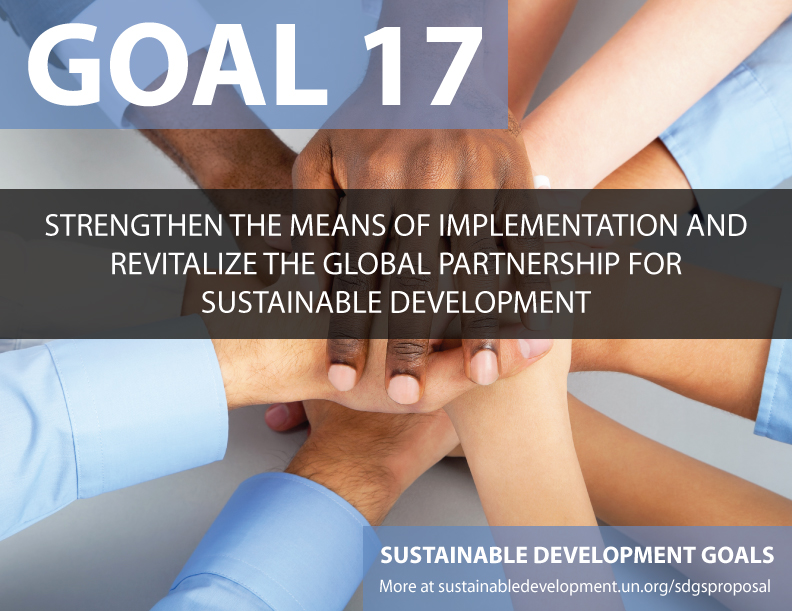
collaboration with other organizations, government and private sector following the SDGs 17. The nature of collaboration on volunteering includes: community partnership, networking, advocacy, funding, support, and invitation to participate in events. Many voluntary organizations also share information with local government and community to push forward community services, including department of education, environment, and energy and so on. This illustrates the crosscutting nature of volunteering throughout and between the different sectors.

Building strong, safe, cohesive community
Through co-operation with government, enterprise, community, the voluntary sector is key partners in the regeneration of deprived communities. The service sector contributes significantly to building community cohesion – creating links and social networks in communities, giving people the opportunity to come together and develop social network, for example, through sports, voluntary arts and youth clubs, institutional co-operation and community identification. Volunteering helps to foster greater trust among citizens and developing norms of solidarity and reciprocity that are essential for stability. The service sector would also help build a safer community and reduce crime. In a study by Putnam (2000) it reported strong inverse relationships between levels of voluntary membership and crime. He found a strong negative correlation between his measure of social capital and homicide. Kawachireported strong negative correlations between measures of voluntary membership and assault, robbery and burglary in the United States (Kawachi, 1999; Kawachi 2000).


Enhancing civic engagement
Alexis de Toqueville (1988), in his classic study of American democracy, saw volunteering is a form of civic engagement through which individuals can make meaningful contributions to their own visions of societal well-being. volunteering increases people‘s confidence in ability to work with local government or state government to meet a range of community needs, such as fixing a pothole or getting an issue on a statewide ballot. People also feel more civic obligations, and are more active in participating in various civic activities, including voting in elections and serving on a jury. The National Survey on Volunteerism of Kenya reports that volunteering helps build a confident, democratic Kenya. With a strong ethos of volunteer management, voluntary organizations have embrace ideals of civic participation and active citizenship. The service sector promotes the involvement of people in the lives of communities and wider society through its projects and through volunteering. Volunteering itself has been about people who step forward to help others whose lives are very different from their own, without judgment or prejudice, to work with people affected by drug or alcohol misuse, people with mental health problems or those affected by war and conflict. Volunteering has thus been a way of creating a climate of optimism, hope and a confident Kenya.

Equality and Anti-discrimination
Challenging oppression and promoting diversity is an important aspect of community development. Volunteering help in promoting good community relations by encouraging honest and open dialogue, enabling people to have a better understanding of and respect for each other’s views and opinions, accept people for who they are irrespective of believe or ethnic group. It works at grass roots level to ensure that all residents of the communitycan live together in a safe, pleasant, vibrant and shared community where everyone feels equal and welcome.

Delivering public goods and services
Volunteering can provide excellent public goods and services, especially that not available (or not available in sufficient amounts) due to both market and government failure. The assumption here is that volunteering fills gaps in the supply of goods and services that are desired by their beneficiaries, but are not available from either private commercial or public sector providers. And even if they are available, some members of society may not be able to access them because of binding budget or other constraints (e.g. imperfect 
information). Voluntary organizations have contributed to planning and designing of 
service delivery through powerful advocacy to ensure that services meet the needs of 
specific groups or individuals. Such service includes 
• Pipeline to public service careers
• Support to the youth education
• Lead in sustainable development
• Response to climate change


Impacts of community service on Volunteers
“There is a saying that volunteers don’t get paid not because they are worthless, but because they are priceless” (Voluntary service overseas) VSO.  Volunteering has certain positive impact on the volunteer, such as social recognition, better health and self-esteem, building résumés, training and career enhancement; economic benefits and capacity in the labor market. Service sectors provide volunteers with the opportunity to explore different career paths, gain job-related skills, develop leadership skills, and network with community leaders, while engaged in activities that strengthen communities.
According to the 2000 National Survey of Giving, Volunteering and Participating (NSGVP), more than three quarters (79%) of volunteers said that their volunteer activities helped them with their interpersonal skills, such as understanding people better, motivating others, and dealing with difficult situations. Just over two thirds (68%) of volunteers said that volunteering helped them to develop better communication skills (63%) reported increased knowledge about global issues and issues related to their volunteering. The percentage of volunteers who reported gaining specific skills as a result of volunteering increased steadily with the number of hours they contributed.

Thank you for taking time to read this post! Share your thoughts using the comments box and follow the City-Fellow-Program and Hope Foundation. #CityFellowProgram , #HopeFoundation.

THIS BLOG claims no credit for any images posted on this site unless otherwise noted. Images on this blog are copyright to its respectful owners. If there is an image appearing on this blog that belongs to you and do not wish for it appear on this site, please E-mail with a link to said image and it will be promptly removed.

Saturday, 4 March 2017

Unlock your mind; READ!


A misguided conception in the face of emerging technology and advancement in our world hovers around the globe without restraint. It is as regards the benefits of reading. It is fast becoming a subject of debate, To read or not to read; a question of relevance in a new world.
The importance of reading in international development cannot be over emphasized in the face of the need to achieve sustainable development.

Much has been said about reading on an international and collaborative level, however, we will discuss the importance of ensuring personal development before taking on the global mandate for sustainable development.
.


To develop the world, you must develop yourself first, then develop through the journey of International Development.
This is easy to achieve. Reading is a powerful tool to unlock your mental capacity as it adds new knowledge to you, broadens your mind, challenges you to think, it is a mental exercise that refreshes your brain and expands it. Reading gives you an edge over those who don't and takes you miles ahead of them.

Reading introduces you to your strengths and capacity which will equip you to develop the world.
Reading is the light that every generation needs to guide its actions towards the achievement of a better life and world for it to thrive.
The books you read must not be centered around a particular area, it needs not be in relation to formal education always, you need to be a vast reader to thrive in the new world regardless of the lies you might have been told as regards any form of alternative to reading.


Resolve to enjoy reading as many shy away from at because they feel it is boring. Reading is enjoyable especially when you bear in mind the attendant benefits of self development and improvement as highlighted above.

Create an interesting reading atmosphere for yourself by reading while you do what you love doing the most for example, cooking, soccer, singing and so on.

Reading is made easier today in the face of technology designed to augment it, the existence of eBooks, audiobooks, eLibraries, reading softwares and so on make it easier to read, please take advantage of whichever media you have access to in order to develop yourself.
The truth that we fail to tell at all times is that failure to read is the quickest path to extinction and irrelevance, as failure to read keeps you away from the knowledge you need to thrive in the world and remain relevant wherever you are.


Slaves were not allowed to learn to read during the era of slavery because their masters understood the liberating capacity of reading.
For every second you spend reading, you emancipate your mind, learn something new or improve already acquired knowledge, an addition is made to your life and you are better positioned to make a change.

Zeal and action are important to ensure sustainable development, however, these will be misguided without research and acquisition of knowledge. If the actions taken are not borne out of research and careful study of a particular area, the actions will fail and may produce fatal results.

To take on the global mandate of international development, you must design a "self" mandate of personal development which is first achievable through reading thereby acquiring knowledge which equips you ultimately for the global mandate of achieving sustainable development.

The greatest gift you can give to the coming generation is the ability to read and write. Buy a book for an indigent child and teach at least one child to read today.

Emancipate yourself; READ.

This post is written in commemoration of the World Book Day.


Thank you for taking time to read and share this post. Should you have any questions, comments or suggestions do not hesitate to use the comment box.

THIS BLOG claims no credit for any images posted on this site unless otherwise noted. Images on this blog are copyright to its respectful owners. If there is an image appearing on this blog that belongs to you and do not wish for it appear on this site, please E-mail with a link to said image and it will be promptly removed.


Friday, 24 February 2017

The Development Conundrum

THE DEVELOPMENT CONUNDRUM
Is there Hope?? I’ve been asking myself this question since it truly hit me that development is wayyy more complicated than I had anticipated.
Development shouldn’t be that hard, right? Billions of dollars in aid flow to developing countries every year, money is all that is needed, isn’t it? But obviously, it takes a whole lot more than money to bring a country out of ruins.


The success story of China is always a wonder to read, in about fifty years, they developed and the economy is doing way better than the global west countries that have been developed even before time immemorial (I exaggerate but you get the point). I don’t know the intricate details of how they climbed to victory but I know it wasn’t through receiving aid in cash or kind from western governments.
Literature on China suggests the Chinese culture and tradition had a lot to do with the rapid development, sacrifices had to be made by the citizens to see a better China. I ask myself why can’t other developing countries follow suit? Especially Africa, where I’m from and where my heart lies. Was Africa doomed from the beginning? Was it as soon as the white man set foot on our land? So many questions, so little answers. We can say development in Africa took a nose dive when we tried to copy and paste what supposedly worked in the west “neo-liberalism” that’s right, the dreadful Structural Adjustment Programme supposed to work wonders, was the final straw that seemed to break the camel’s back.


Since studying development, one thing I keep getting is questions. So, if aid, humanitarian assistance, social protection, etc., doesn’t work, what will? I expected answers but all I get is questions. There are so many problems in developing countries but so little solutions.
From bad governance from extremely corrupt leaders to political manipulation and domination from the west. Even the countries supposedly trying to help, have hidden motives that most often than not damages these countries’ economies further. So, then what can be done, if the corrupt leaders don’t care about development, the west is more concerned about what they can get out of it all and development projects, by their very design undermine and ignore the knowledge of the supposed “beneficiaries”? This is the ultimate question in development.


It almost wants to make you give up on it all, think there’s no hope or whatsoever for development in Africa and other developing countries. BUT I do believe there’s hope, and its people that genuinely care and are passionate about seeing and making a real difference. People that have no hidden agendas but to help make lives better for the billion-people living in extreme poverty. Those are the people that give me hope. Even though I have more questions than answers, I won’t stop searching for solutions and doing my part in seeing a better world in my lifetime.

Boladale Shobowale.

Thank you for taking time to read and share this post. Should you have any questions, comments or suggestions do not hesitate to use the comment box.

THIS BLOG claims no credit for any images posted on this site unless otherwise noted. Images on this blog are copyright to its respectful owners. If there is an image appearing on this blog that belongs to you and do not wish for it appear on this site, please E-mail with a link to said image and it will be promptly removed.


MEET BOLADALE SHOBOWALE.

Boladale Shobowale was born in Lagos State where she had her basic education. She proceeded to the Prestigious Babcock University, Ilisan Remo, Ogun State, where she bagged her Bachelors Degree in International Law and Diplomacy. Being the very ingenious and dynamic personality that she is, Boladale has over the years developed great mastery and skill in the field of International Development.

In her quest to possess the requisite skill and expertise needed in International Development, she served as a Public Relations Intern at the United Nations Information Center, Lagos State, Nigeria in 2014. She went on to gain further refinement in the process of law making in 2016 working at the Lagos State House of Assembly. She is a skilled mediator who duly served her country, Nigeria in the Ministry of Justice, Rivers State, Nigeria.

Boladale is currently a postgraduate student of Development Studies in the University of Sussex, United Kingdom. It thus goes without saying, that Boladale is highly skilled and well versed in the field of International Development.

It will be a great time and privilege of learning only from the best, as Boladale will be educating us tomorrow on Aid, Development and Active Citizenship.

Please Stay tuned to this blog as the best is coming your way!

Thank you for taking time to read and share this post. Should you have any questions, comments or suggestions do not hesitate to use the comment box.

Friday, 10 February 2017

ENGAGE!


ENGAGE!

The global call to change as regards our attitudes, disposition to nature, use of land resources, interaction with people, our environment and so much more is one that must not be ignored. The goals seem difficult to achieve, technical and impossible to meet given the global scheme of things. However, what I have come to understand is that, joint and collaborative efforts towards the achievement of the global goals makes it an easy and interesting ride towards the achievement of the goals.

Below are five (5) simple but compelling reasons why you should participate in the global march for change.

1. It doesn't hurt to join but it potentially hurts when you don't.
The global drive towards change in our way of interacting with our world and its constituents is one that is 100% guaranteed to be beneficial. A lot of people do not engage in global development for many reasons I cannot begin to discuss, however, the reason you should do away with whatever stereotype is stopping you from participating is simple: it doesn't hurt when you do but it hurts when you don't. Your ambivalence towards partipation or engagement can be resolved this way, when you take action, no matter how little, you have solved a problem that potentially has the capacity to cause more damage than you can imagine but when you don't, the problem gets compounded and ultimately, constitutes itself a glosbal cause for alarm. A basic example is this; it doesn't hurt to reduce your use of plastic bags and materials, but it hurts when you don't because it compounds the global concern about waste management especially non biodegradable waste. Save the environment, reduce by half, your use of plastic materials in the coming week.


2. All you would rather do depends largely on it.
Many of us are guilty of staying away from the global action scene because we are busy doing other "important " things. We would rather engage in matters that we feel affect our lives forgetting that the existence of a healthy globe is an indispensable condition for your efforts in every other field to be made manifest, imagine issues of peace and conflict were not dealt with as they ought to... how do yo intend to carry out your activities in an unstable environment?  Make a decision this week to take action in relation to peace and conflict this coming week , it may be as little as signing a petition to end violence somewhere in the world.


3. Just as you met a world you could thrive in, some other people also deserve the opportunity.
You did not have to "build " the world you came into, you met it because some people treated it right thus it was available for you to thrive. You are also obliged to take steps to ensure that the world the coming generation is to meet and inherit is easily habitable for them without having to struggle to survive under a poor climate. This week reduce your energy consumption by keeping your light bulbs and sockets off more than they are left on without use.


4. There are limitless opportunities when you do.
The opportunity to do more, increase in every area of life and experience limitless growth is guaranteed by a healthy and peaceful globe. Won't you rather take action? This week, make a decision to engage in the achievement of goal 17: Partnership for the Goals in your little way.


5. You will be glad you did.
In end, when you look back on how things used to be and the better position the world is because of positive actions from people all over the world, you will be glad you contributed your quota.


Engage! Participate ! Change.

Thank you for taking time to read and share this post. Should you have any questions, comments or suggestions do not hesitate to use the comment box.

THIS BLOG claims no credit for any images posted on this site unless otherwise noted. Images on this blog are copyright to its respectful owners. If there is an image appearing on this blog that belongs to you and do not wish for it appear on this site, please E-mail with a link to said image and it will be promptly removed.


Saturday, 4 February 2017

DIVERSITY AND GLOBAL HAPPINESS


Diversity and Global Happiness...

Strong feelings v. Right actions.

The global scene is neutral and diverse , it's a platform meant for everyone regardless of race, culture, beliefs, religion, creed, likes, dislikes or any other qualifying attributes. The global scene is the largest platform that seeks to balance the interests of everyone, meet general and specific needs and most importantly, ensure that everyone gets a chance to live a good life that they deserve. The global mandate is to ensure that the well being of everyone is guaranteed; EVERYONE.

The difficulty in achieving the global mandate is apparent. An attempt to strike a balance that cuts across all persons regardless of their differences is one that is by default almost impossible, however, is there a possibility of a common ground that almost achieves the global mandate regardless of our differences and beliefs? YES.
Imagine we were all born into the world and allowed to grow as we babies? Open minded, plain and devoid of teachings that help us to exalt rather than appreciate, accommodate and work on our differences?

The impossibility of the above highlighted is beneficial and destructive, the latter being the most prominent and a major ground for clashes and chaos on the global scene.


Our focus today is on the ability to identify, appraise and approach differences in view of the march towards sustainability. We find it easy use mass media to air our opinion on our differences. Once we identify what makes someone else different from us, we often begin to analyze and show cause as to why our position as regards the ground of difference is the best forgetting that the other person through whom you realized the difference believes so too, that is, his position is the best.

It's important to understand that every ground of difference on the global scene was a result of one person or the other thinking it's the best practice, to this extent, we must ensure that these grounds are appraised and solved with a great understanding of the sensitivity of the belief, the believer and the ardent passion to sustain it.

An understanding of the sensitivity of these 3 variables would help us approach matters with the right attitude; in love and faith in the ability for everyone to thrive on the global scene regardless of our differences. It will help us see the destructive, retarded and non favorable differences as another opportunity to show love and bring about change and development on the global scene.


We must not put our distaste before our ability to approach matters with wisdom, patience and good judgment.
We need to understand that our differences are the most difficult aspect of our lives to modify, yet the easiest to change with the right attitude and approach.

We must, identity, appraise and approach these differences with a clear mind, wisdom, patience; not acting in the heat  of the moment but understanding of the need to appreciate people for their differences as well as the need to adjust some to meet the need for change, sustainability and happiness of EVERYONE on the global scene.

Your approach to difference should not always be to change the belief of a person ( because yours might just be totally wrong).
The identification of a ground of difference is not a call to incite hate, hurt feelings and castigate, rather it's a call to love, discussion and calculated steps towards a better globe for us to thrive .
Remember that our differences go to the root of our feelings and to deal with them unreasonably and selfishly is to open doors for chaos that could be avoided with weapons of healthy character.


TASK: List 5 differences that you find distasteful on the global scene and list five healthy ways to balance and adjust them.

Thank you for taking time to read and share this post. Should you have any questions, comments or suggestions do not hesitate to use the comment box.

THIS BLOG claims no credit for any images posted on this site unless otherwise noted. Images on this blog are copyright to its respectful owners. If there is an image appearing on this blog that belongs to you and do not wish for it appear on this site, please E-mail with a link to said image and it will be promptly removed.


Friday, 27 January 2017

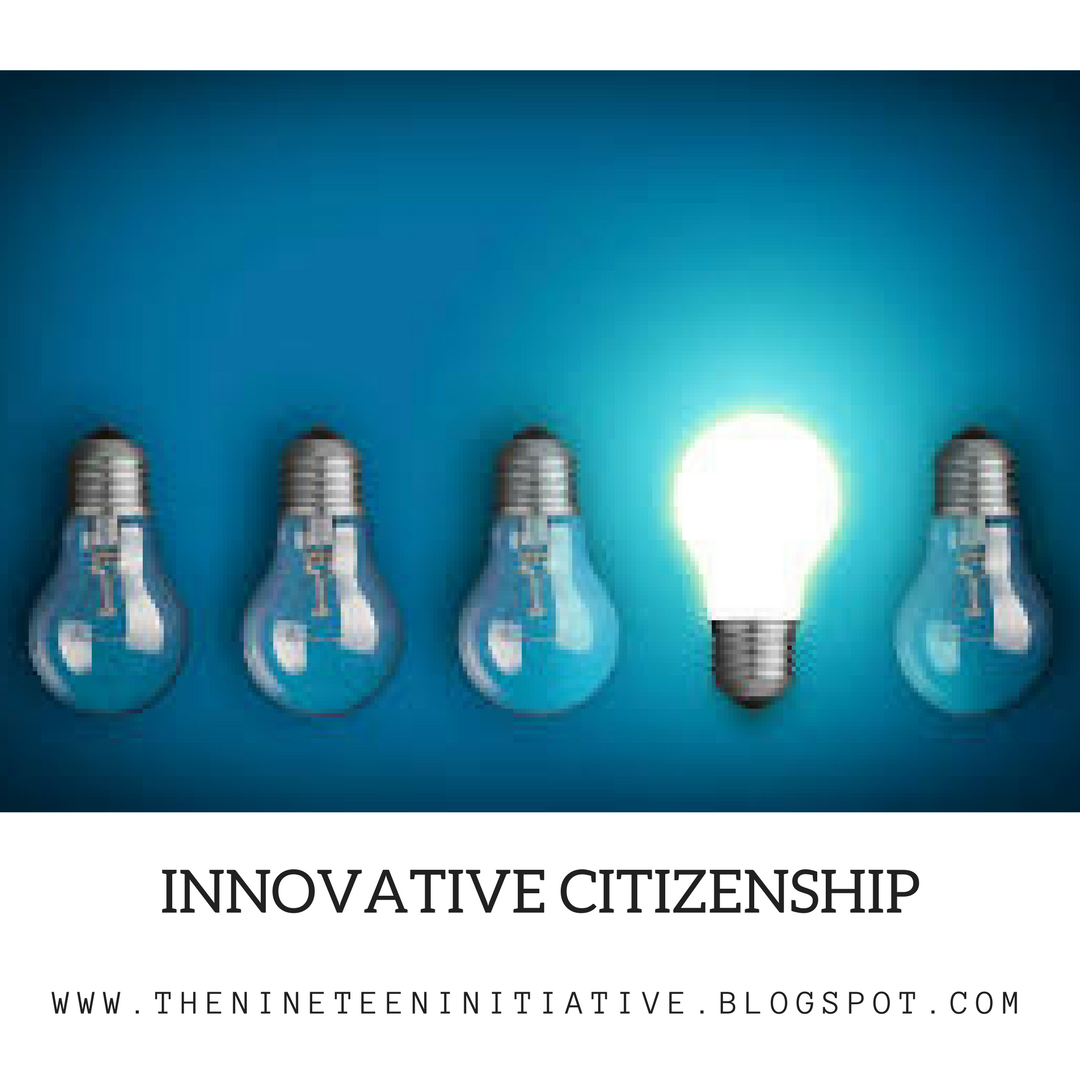
INNOVATIVE CITIZENSHIP


It's easy to believe that anyone can hold the government responsible for their actions (which should be) but what obtains outside the realm of that thought is the difficulty in maximizing that which we believe and are advised by others to do.
Innovation as defined by the Merriam-Webster dictionary is "a new idea, device, method ". The need for innovation in every aspect of life cannot be done away with as it ensures that our lives evolve thus making life better and interesting.
The last post highlighted the fact that good governance is imperative for sustainable development and this post seeks to highlight ways in which we can make the government accountable to its people.
You would expect me to highlight serially what can be done but that is not what this post will do as it is conventional bringing about the same results. A lot has been said on the internet and by experts yet only so much has been done. 
More can be done and achieved through what I call "Innovative Citizenship ".
Innovative citizenship is a form of active citizenship which involves seeking new ideas, devices and methods through which we can bring about a change in our countries, including the guarantee of good governance.


As an Innovative Citizen, you should search yourself for ways that you may participate in the governance  of your nation to bring about a change and accountability. No one should teach you how to exercise your right to ensure the government is accountable with all that you have entrusted in its care.
The global cry for development is multifaceted and requires action by everyone with the government being the ground for the synchronization of individual efforts. To this extent, just as we are encouraged to be innovative in our quest to achieve a sustainable world, so should we be in our citizenship in order to ensure visible progress and development.
Innovative citizenship pushes everyone to undertake the task of looking for new ways to participate in governance and with this comes the drive to follow through with such innovation. The sustainability of our actions seem more feasible that way.
Innovative citizenship brings about novel ideas to proffer solutions to issues caused by bad governance, thereby increasing the glimmer of hope in the guarantee of the fact that power rests with the people and must do so perpetually.
You must search yourself for your capabilities and interests, find a way to channel them into ensuring good governance wherever you are. It could be through your ability to research, speak or analyze amongst others. What is important is that you channel your energy and talents into ensuring that your country is purged of bad governance. 


The world you seek to thrive needs your innovation, what can you do about it?
Thank you for taking time to read and share this post. Should you have any questions, comments or suggestions do not hesitate to use the comment box.

THIS BLOG claims no credit for any images posted on this site unless otherwise noted. Images on this blog are copyright to its respectful owners. If there is an image appearing on this blog that belongs to you and do not wish for it appear on this site, please E-mail with a link to said image and it will be promptly removed.